Welcome to Medica.

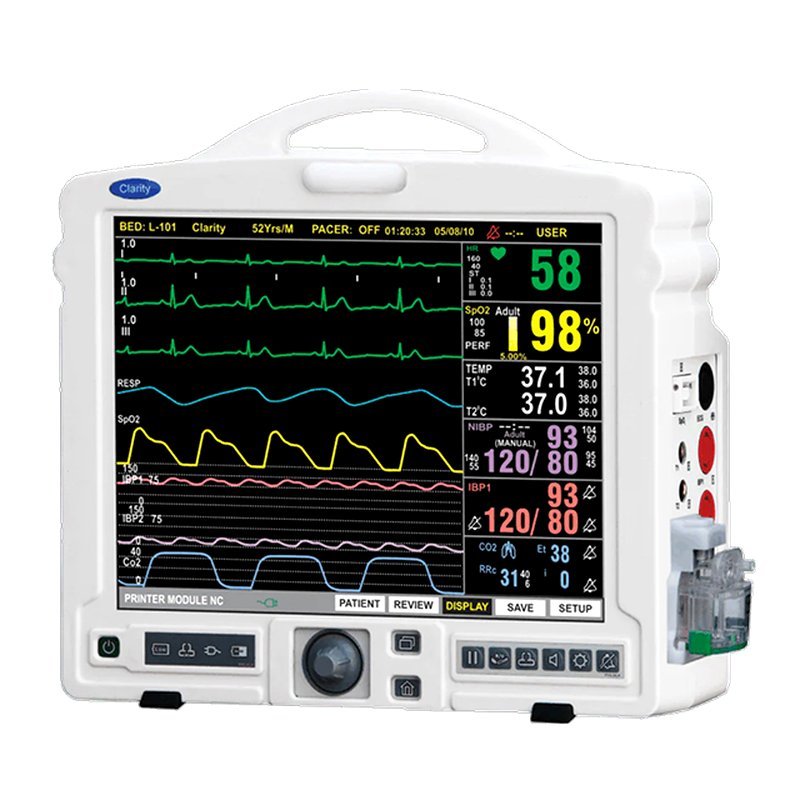
Patient monitors is a medical equipment device designed to measure, record, and display key patient parameters, including heart rate, rhythm, SpO2, blood pressure, temperature, and respiratory rate. Patient monitor machines help track a patient’s health and ensure high-quality healthcare by providing real-time data for accurate monitoring and timely intervention.
Patient monitoring systems typically consist of three main components:
The demand for patient monitoring systems is growing, with ongoing innovation and patenting in the field. Sterling’s expert designers offer cutting-edge medical equipment designs, transforming ideas into practical solutions. Our design services cover user interface design, workflow optimization, CAD mock-ups, and 3D-printed prototypes, ensuring compliance with clinical, commercial, and regulatory standards. To learn more about how we can assist with your patient monitoring systems, contact us today.
Patient monitor machines are commonly used in hospitals and increasingly in home settings for individuals with chronic conditions such as diabetes. They are essential for tracking vital signs and detecting potential complications. Here are some key uses of patient monitor machine in the medical field:
These applications highlight the importance of allied patient monitors in both clinical and home settings for effective health management.
Contec Five Para Patient Monitor: The Contec Five Para Patient Monitor system provides comprehensive monitoring of five key vital signs: ECG, heart rate, blood pressure, SpO2, and temperature. It features a clear display, user-friendly interface, and advanced alarm functions to ensure timely detection of abnormalities. Ideal for both hospital and home settings.
Niscomed Five Para Patient Monitor: The Niscomed Five Para Patient Monitor offers reliable monitoring of five vital signs: ECG, heart rate, blood pressure, SpO2, and temperature. It is designed for easy operation and provides real-time data with an intuitive display. It includes customizable alarm settings to enhance patient safety.
Contec CMS5100 Patient Monitor: The Contec CMS5100 Patient Monitor is a versatile device that tracks key vital signs such as ECG, heart rate, blood pressure, SpO2, and temperature. It features a high-resolution display, multiple alarm settings, and data storage capabilities. Its design is focused on accuracy and ease of use for diverse healthcare environments.
Perkant Abhay Parimiti Spot Check Patient Monitor: The Perkant Abhay Parimiti Spot Check Patient Monitor system is designed for quick and accurate spot-check measurements of vital signs, including heart rate, blood pressure, SpO2, and temperature. Its compact design and user-friendly interface make it suitable for various clinical and emergency settings.
Schiller Truscope III Patient Monitor: The Schiller Truscope III Patient Monitor is a robust device for monitoring vital signs such as ECG, heart rate, blood pressure, SpO2, and temperature. It features advanced technology for precise measurements, a high-resolution screen for easy data interpretation, and comprehensive alarm and data management capabilities. Suitable for both intensive care and general monitoring.
Types of Patient Monitors
Monitoring Specific Patient Populations
Key Features to Consider
Display and User Interface
Connectivity and Integration
Monitor Type: Choose between vital signs monitors or multiparameter monitors based on your needs.
Key Parameters: Ensure it measures essential parameters (e.g., ECG, SpO2, blood pressure, temperature).
Display and Interface: Look for user-friendly displays with clear, intuitive interfaces.
Accuracy and Reliability: Verify the accuracy of measurements and reliability of data.
Connectivity: Check compatibility with Hospital Information Systems (HIS) for data integration.
Features: Decide between essential features and advanced options based on your requirements.
Maintenance and Support: Consider warranty, service contracts, and available technical support.
Patient Population: Choose devices suitable for specific patient groups (e.g., pediatric, geriatric).
Budget: Balance cost with features and long-term benefits.
Discover a wide range of high-quality patient monitors available at Medikabazaar. With options suited for various healthcare needs, including vital signs and multiparameter monitors, you can find the right device to ensure accurate and reliable patient care. Enjoy convenient online shopping and timely delivery for your medical equipment needs.
Purchase patient monitors in bulk with ease through our online platform. Enjoy a smooth and efficient buying experience with competitive pricing and streamlined ordering processes. Get the quality equipment you need without any complications.
Experience swift and reliable delivery when buying patient monitors in bulk online. Our efficient shipping ensures your equipment arrives quickly and securely, helping you stay on top of your healthcare needs without delay.
Buy and compare the Patient Monitor Price.
|
Products |
|
Contec Five Para Patient Monitor |
|
Niscomed Five Para Patient Monitor |
|
Contec CMS5100 Patient monitor |
|
Perkant Abhay Parimiti Spot Check Patient monitor |
|
Schiller Truscope III Patient Monitor |
|
Allied Patient Monitor |
Ans. A patient monitor system is a medical device used to continuously track and display a patient’s vital signs, such as heart rate, blood pressure, SpO2, and temperature. It helps healthcare providers assess a patient’s condition in real-time, detect abnormalities, and make informed decisions for timely intervention.
Ans. To read a patient monitor, observe the displayed vital signs and values on the screen, such as heart rate, blood pressure, SpO2, and temperature. Ensure the data is within normal ranges and review any alarm notifications or trends to identify potential issues or abnormalities in the patient’s condition.
Ans. A hospital patient monitor system typically tracks seven key parameters: heart rate (ECG), blood pressure, SpO2 (oxygen saturation), respiratory rate, temperature, end-tidal CO2 (if applicable), and sometimes additional metrics like glucose levels or invasive pressures. These parameters provide a comprehensive view of a patient’s vital signs and overall health.
Ans. Patient monitoring provides real-time data on vital signs, allowing for early detection of abnormalities, timely intervention, and improved patient outcomes. It enhances care by tracking progress, managing treatment adjustments, and ensuring continuous oversight of critical conditions.
Ans. A patient monitor system measures vital signs such as heart rate, blood pressure, SpO2 (oxygen saturation), respiratory rate, and temperature. It may also track additional parameters like end-tidal CO2 and glucose levels, depending on the monitor’s capabilities.

Typically replies within an hour
I will be back soon

Reviews
There are no reviews yet.